How to See Your Competitors' Ads on TikTok
By the Floow editorial team
The free, official way to see your competitors' ads on TikTok is the commercial content library. You search by advertiser name or keyword and filter by country, ad type and date. You can also check the brand's profile and your own For You feed.
That library shows what is being published, but not what works. So the useful move is not to look at lots of ads. It is to analyze 15 or 20 of them using the same variables and pull decisions out of them for your own brief.
Where to see your competitors' ads without paying
TikTok's commercial content library is public and free, and you don't need to pay to use it. You can filter by country, ad type and date, and search by brand or by a product keyword. If you sell in the US and in Mexico, run the search in each country separately: the ads don't always match.
Two other manual methods complement the library. You can search for the brand on TikTok and review its profile, where you see how it communicates organically. And you can pay attention to the ads that show up in your For You feed once you engage with content in your niche.
It's legal: these are public ads that the platform itself shows to anyone. Looking and analyzing is not copying. Copying a video shot for shot is a bad idea: it won't help you, because your product and your audience are not theirs, and it isn't what you're after when you analyze.
When a paid tool is worth it
Paid tools and data-extraction tools offer more history, more convenient ad saving and, sometimes, a cross-view with Meta. They are useful if you monitor many brands at once or need an archive going back months.
To get started you don't need them. With the official library and a spreadsheet you can build a serious analysis of a single competitor. If the volume overwhelms you later, then paying makes sense. Before you do, ask yourself whether you lack information or lack time to use the information you already have. Very often it's the second.
Which ads deserve your time
Not all ads are worth the same. One that has been live for weeks is usually more reliable than a brand-new one: it's more likely still running because it pays off for the brand, although that is not proof. If it also has variants, with the same message under different openings or scenes, the brand is iterating on something it cares about.
There is a limit worth keeping clear: the public library shows neither results nor spend. You don't know how much a competitor spends or which ad works for them. What you see are signals, not proof. Treat each pattern as a hypothesis you will have to check with your own tests, something we cover in what I would change first when a winning ad stops working.
A template to analyze 15 or 20 ads
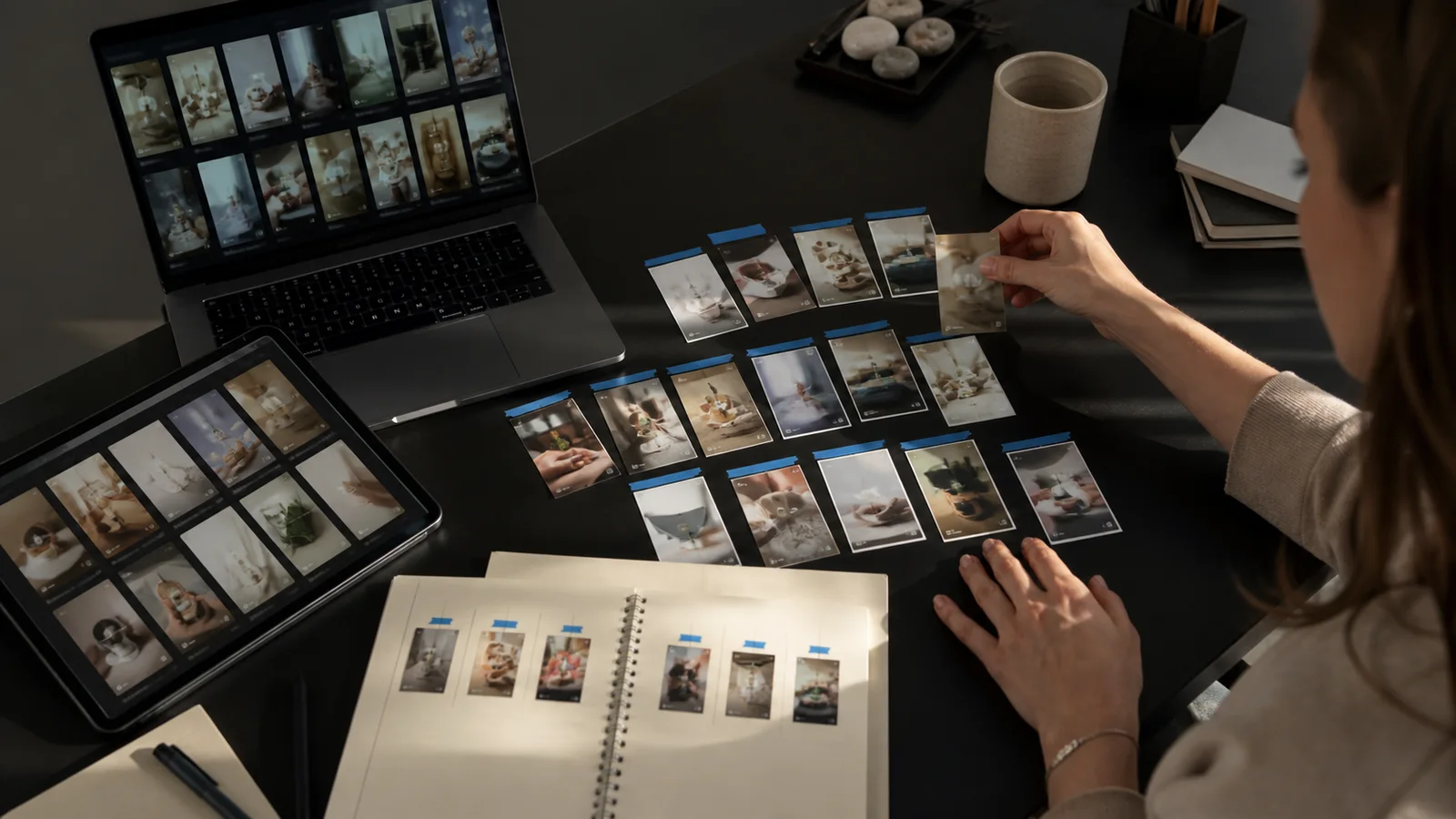
Watching twenty ads in a row gives you a false sense of research. You remember two flashy hooks and lose the decisions that repeat underneath. To avoid that, move each ad into a row with the same columns:
Don't write down only the hook line. Two videos can say the same thing and create different expectations through the first frame. And time the proof: notice whether the ad piles up benefits without giving one concrete moment that lets you believe any of them. That is exactly the problem we dig into in why your UGC ad loses viewers five seconds after the hook. Review the sample at least once a week.
- Opening and its function: problem, result, demonstration, authority, surprise or comparison, plus what appears in the first frame.
- Proof moment: the second where it stops promising and starts demonstrating, and whether the proof is visual, testimonial, technical or social.
- Objection: which doubt of the buyer it tries to resolve.
- Product placement: when it appears and whether it is visible during the objection.
- Video length.
- Call to action: what it asks for and at what moment.
- Ad age: start date and whether it is still active.
Separate patterns from coincidences
Once you have the table, look for what repeats. Three ads using the same song doesn't mean the song explains their performance. Look for deeper relationships: the product visible during the objection, a shot change on every new idea, or a close that repeats the opening scene.
A useful pattern is one that repeats across several advertisers and in long-running ads, and that also has a logical reason behind it. If you analyze a single brand, what you see is that brand's style, not an industry pattern. If you can't explain why it would work, leave it as a coincidence.
An example: if in most of a supplement brand's ads the product takes a while to appear, it may be a pattern, or it may be that the brand always shoots that way. Check whether the oldest ads do the same and whether other brands agree, and decide after that.
End with a brief, not a moodboard
A folder of references inspires, but it decides nothing. Sum up the analysis in three decisions for your own brief:
Don't copy an ad literally. Keep the function of the device and rebuild the scene around your product and your audience.
When the brief is ready, it's time to produce variants quickly. At Floow we create AI UGC videos for product ads, and they let you test those three decisions without setting up a shoot for each one.
- One structure worth adapting to your product.
- One convention everyone repeats and that you want to challenge.
- One question the references don't answer and that you will test yourself.